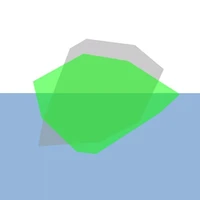
- Understanding 3D Object Articulation in Internet Videos We propose to investigate detecting and characterizing the 3D planar articulation of objects from ordinary videos. While seemingly easy for humans, this problem poses many challenges for computers. We propose to approach this problem by combining a top-down detection system that finds planes that can be articulated along with an optimization approach that solves for a 3D plane that can explain a sequence of observed articulations. We show that this system can be trained on a combination of videos and 3D scan datasets. When tested on a dataset of challenging Internet videos and the Charades dataset, our approach obtains strong performance. Project site: https://jasonqsy.github.io/Articulation3D 5 authors · Mar 30, 2022
- Medical Image Registration via Neural Fields Image registration is an essential step in many medical image analysis tasks. Traditional methods for image registration are primarily optimization-driven, finding the optimal deformations that maximize the similarity between two images. Recent learning-based methods, trained to directly predict transformations between two images, run much faster, but suffer from performance deficiencies due to model generalization and the inefficiency in handling individual image specific deformations. Here we present a new neural net based image registration framework, called NIR (Neural Image Registration), which is based on optimization but utilizes deep neural nets to model deformations between image pairs. NIR represents the transformation between two images with a continuous function implemented via neural fields, receiving a 3D coordinate as input and outputting the corresponding deformation vector. NIR provides two ways of generating deformation field: directly output a displacement vector field for general deformable registration, or output a velocity vector field and integrate the velocity field to derive the deformation field for diffeomorphic image registration. The optimal registration is discovered by updating the parameters of the neural field via stochastic gradient descent. We describe several design choices that facilitate model optimization, including coordinate encoding, sinusoidal activation, coordinate sampling, and intensity sampling. Experiments on two 3D MR brain scan datasets demonstrate that NIR yields state-of-the-art performance in terms of both registration accuracy and regularity, while running significantly faster than traditional optimization-based methods. 11 authors · Jun 7, 2022
- AI in Lung Health: Benchmarking Detection and Diagnostic Models Across Multiple CT Scan Datasets Lung cancer remains the leading cause of cancer-related mortality worldwide, and early detection through low-dose computed tomography (LDCT) has shown significant promise in reducing death rates. With the growing integration of artificial intelligence (AI) into medical imaging, the development and evaluation of robust AI models require access to large, well-annotated datasets. In this study, we introduce the utility of Duke Lung Cancer Screening (DLCS) Dataset, the largest open-access LDCT dataset with over 2,000 scans and 3,000 expert-verified nodules. We benchmark deep learning models for both 3D nodule detection and lung cancer classification across internal and external datasets including LUNA16, LUNA25, and NLST-3D+. For detection, we develop two MONAI-based RetinaNet models (DLCSDmD and LUNA16-mD), evaluated using the Competition Performance Metric (CPM). For classification, we compare five models, including state-of-the-art pretrained models (Models Genesis, Med3D), a selfsupervised foundation model (FMCB), a randomly initialized ResNet50, and proposed a novel Strategic Warm-Start++ (SWS++) model. SWS++ uses curated candidate patches to pretrain a classification backbone within the same detection pipeline, enabling task-relevant feature learning. Our models demonstrated strong generalizability, with SWS++ achieving comparable or superior performance to existing foundational models across multiple datasets (AUC: 0.71 to 0.90). All code, models, and data are publicly released to promote reproducibility and collaboration. This work establishes a standardized benchmarking resource for lung cancer AI research, supporting future efforts in model development, validation, and clinical translation. 7 authors · May 7, 2024
- 3D-VisTA: Pre-trained Transformer for 3D Vision and Text Alignment 3D vision-language grounding (3D-VL) is an emerging field that aims to connect the 3D physical world with natural language, which is crucial for achieving embodied intelligence. Current 3D-VL models rely heavily on sophisticated modules, auxiliary losses, and optimization tricks, which calls for a simple and unified model. In this paper, we propose 3D-VisTA, a pre-trained Transformer for 3D Vision and Text Alignment that can be easily adapted to various downstream tasks. 3D-VisTA simply utilizes self-attention layers for both single-modal modeling and multi-modal fusion without any sophisticated task-specific design. To further enhance its performance on 3D-VL tasks, we construct ScanScribe, the first large-scale 3D scene-text pairs dataset for 3D-VL pre-training. ScanScribe contains 2,995 RGB-D scans for 1,185 unique indoor scenes originating from ScanNet and 3R-Scan datasets, along with paired 278K scene descriptions generated from existing 3D-VL tasks, templates, and GPT-3. 3D-VisTA is pre-trained on ScanScribe via masked language/object modeling and scene-text matching. It achieves state-of-the-art results on various 3D-VL tasks, ranging from visual grounding and dense captioning to question answering and situated reasoning. Moreover, 3D-VisTA demonstrates superior data efficiency, obtaining strong performance even with limited annotations during downstream task fine-tuning. 6 authors · Aug 8, 2023
- Automated Model Design and Benchmarking of 3D Deep Learning Models for COVID-19 Detection with Chest CT Scans The COVID-19 pandemic has spread globally for several months. Because its transmissibility and high pathogenicity seriously threaten people's lives, it is crucial to accurately and quickly detect COVID-19 infection. Many recent studies have shown that deep learning (DL) based solutions can help detect COVID-19 based on chest CT scans. However, most existing work focuses on 2D datasets, which may result in low quality models as the real CT scans are 3D images. Besides, the reported results span a broad spectrum on different datasets with a relatively unfair comparison. In this paper, we first use three state-of-the-art 3D models (ResNet3D101, DenseNet3D121, and MC3\_18) to establish the baseline performance on the three publicly available chest CT scan datasets. Then we propose a differentiable neural architecture search (DNAS) framework to automatically search for the 3D DL models for 3D chest CT scans classification with the Gumbel Softmax technique to improve the searching efficiency. We further exploit the Class Activation Mapping (CAM) technique on our models to provide the interpretability of the results. The experimental results show that our automatically searched models (CovidNet3D) outperform the baseline human-designed models on the three datasets with tens of times smaller model size and higher accuracy. Furthermore, the results also verify that CAM can be well applied in CovidNet3D for COVID-19 datasets to provide interpretability for medical diagnosis. 9 authors · Jan 13, 2021
4 GLEAM: Learning Generalizable Exploration Policy for Active Mapping in Complex 3D Indoor Scenes Generalizable active mapping in complex unknown environments remains a critical challenge for mobile robots. Existing methods, constrained by insufficient training data and conservative exploration strategies, exhibit limited generalizability across scenes with diverse layouts and complex connectivity. To enable scalable training and reliable evaluation, we introduce GLEAM-Bench, the first large-scale benchmark designed for generalizable active mapping with 1,152 diverse 3D scenes from synthetic and real-scan datasets. Building upon this foundation, we propose GLEAM, a unified generalizable exploration policy for active mapping. Its superior generalizability comes mainly from our semantic representations, long-term navigable goals, and randomized strategies. It significantly outperforms state-of-the-art methods, achieving 66.50% coverage (+9.49%) with efficient trajectories and improved mapping accuracy on 128 unseen complex scenes. Project page: https://xiao-chen.tech/gleam/. 6 authors · May 26, 2025 1
- FaceVerse: a Fine-grained and Detail-controllable 3D Face Morphable Model from a Hybrid Dataset We present FaceVerse, a fine-grained 3D Neural Face Model, which is built from hybrid East Asian face datasets containing 60K fused RGB-D images and 2K high-fidelity 3D head scan models. A novel coarse-to-fine structure is proposed to take better advantage of our hybrid dataset. In the coarse module, we generate a base parametric model from large-scale RGB-D images, which is able to predict accurate rough 3D face models in different genders, ages, etc. Then in the fine module, a conditional StyleGAN architecture trained with high-fidelity scan models is introduced to enrich elaborate facial geometric and texture details. Note that different from previous methods, our base and detailed modules are both changeable, which enables an innovative application of adjusting both the basic attributes and the facial details of 3D face models. Furthermore, we propose a single-image fitting framework based on differentiable rendering. Rich experiments show that our method outperforms the state-of-the-art methods. 6 authors · Mar 26, 2022
- Clustering based Point Cloud Representation Learning for 3D Analysis Point cloud analysis (such as 3D segmentation and detection) is a challenging task, because of not only the irregular geometries of many millions of unordered points, but also the great variations caused by depth, viewpoint, occlusion, etc. Current studies put much focus on the adaption of neural networks to the complex geometries of point clouds, but are blind to a fundamental question: how to learn an appropriate point embedding space that is aware of both discriminative semantics and challenging variations? As a response, we propose a clustering based supervised learning scheme for point cloud analysis. Unlike current de-facto, scene-wise training paradigm, our algorithm conducts within-class clustering on the point embedding space for automatically discovering subclass patterns which are latent yet representative across scenes. The mined patterns are, in turn, used to repaint the embedding space, so as to respect the underlying distribution of the entire training dataset and improve the robustness to the variations. Our algorithm is principled and readily pluggable to modern point cloud segmentation networks during training, without extra overhead during testing. With various 3D network architectures (i.e., voxel-based, point-based, Transformer-based, automatically searched), our algorithm shows notable improvements on famous point cloud segmentation datasets (i.e.,2.0-2.6% on single-scan and 2.0-2.2% multi-scan of SemanticKITTI, 1.8-1.9% on S3DIS, in terms of mIoU). Our algorithm also demonstrates utility in 3D detection, showing 2.0-3.4% mAP gains on KITTI. 5 authors · Jul 26, 2023
53 LucidDreamer: Domain-free Generation of 3D Gaussian Splatting Scenes With the widespread usage of VR devices and contents, demands for 3D scene generation techniques become more popular. Existing 3D scene generation models, however, limit the target scene to specific domain, primarily due to their training strategies using 3D scan dataset that is far from the real-world. To address such limitation, we propose LucidDreamer, a domain-free scene generation pipeline by fully leveraging the power of existing large-scale diffusion-based generative model. Our LucidDreamer has two alternate steps: Dreaming and Alignment. First, to generate multi-view consistent images from inputs, we set the point cloud as a geometrical guideline for each image generation. Specifically, we project a portion of point cloud to the desired view and provide the projection as a guidance for inpainting using the generative model. The inpainted images are lifted to 3D space with estimated depth maps, composing a new points. Second, to aggregate the new points into the 3D scene, we propose an aligning algorithm which harmoniously integrates the portions of newly generated 3D scenes. The finally obtained 3D scene serves as initial points for optimizing Gaussian splats. LucidDreamer produces Gaussian splats that are highly-detailed compared to the previous 3D scene generation methods, with no constraint on domain of the target scene. 5 authors · Nov 22, 2023 4
- Synthetic Lunar Terrain: A Multimodal Open Dataset for Training and Evaluating Neuromorphic Vision Algorithms Synthetic Lunar Terrain (SLT) is an open dataset collected from an analogue test site for lunar missions, featuring synthetic craters in a high-contrast lighting setup. It includes several side-by-side captures from event-based and conventional RGB cameras, supplemented with a high-resolution 3D laser scan for depth estimation. The event-stream recorded from the neuromorphic vision sensor of the event-based camera is of particular interest as this emerging technology provides several unique advantages, such as high data rates, low energy consumption and resilience towards scenes of high dynamic range. SLT provides a solid foundation to analyse the limits of RGB-cameras and potential advantages or synergies in utilizing neuromorphic visions with the goal of enabling and improving lunar specific applications like rover navigation, landing in cratered environments or similar. 4 authors · Aug 29, 2024
- ScanEnts3D: Exploiting Phrase-to-3D-Object Correspondences for Improved Visio-Linguistic Models in 3D Scenes The two popular datasets ScanRefer [16] and ReferIt3D [3] connect natural language to real-world 3D data. In this paper, we curate a large-scale and complementary dataset extending both the aforementioned ones by associating all objects mentioned in a referential sentence to their underlying instances inside a 3D scene. Specifically, our Scan Entities in 3D (ScanEnts3D) dataset provides explicit correspondences between 369k objects across 84k natural referential sentences, covering 705 real-world scenes. Crucially, we show that by incorporating intuitive losses that enable learning from this novel dataset, we can significantly improve the performance of several recently introduced neural listening architectures, including improving the SoTA in both the Nr3D and ScanRefer benchmarks by 4.3% and 5.0%, respectively. Moreover, we experiment with competitive baselines and recent methods for the task of language generation and show that, as with neural listeners, 3D neural speakers can also noticeably benefit by training with ScanEnts3D, including improving the SoTA by 13.2 CIDEr points on the Nr3D benchmark. Overall, our carefully conducted experimental studies strongly support the conclusion that, by learning on ScanEnts3D, commonly used visio-linguistic 3D architectures can become more efficient and interpretable in their generalization without needing to provide these newly collected annotations at test time. The project's webpage is https://scanents3d.github.io/ . 5 authors · Dec 12, 2022
- M-SCAN: A Multistage Framework for Lumbar Spinal Canal Stenosis Grading Using Multi-View Cross Attention The increasing prevalence of lumbar spinal canal stenosis has resulted in a surge of MRI (Magnetic Resonance Imaging), leading to labor-intensive interpretation and significant inter-reader variability, even among expert radiologists. This paper introduces a novel and efficient deep-learning framework that fully automates the grading of lumbar spinal canal stenosis. We demonstrate state-of-the-art performance in grading spinal canal stenosis on a dataset of 1,975 unique studies, each containing three distinct types of 3D cross-sectional spine images: Axial T2, Sagittal T1, and Sagittal T2/STIR. Employing a distinctive training strategy, our proposed multistage approach effectively integrates sagittal and axial images. This strategy employs a multi-view model with a sequence-based architecture, optimizing feature extraction and cross-view alignment to achieve an AUROC (Area Under the Receiver Operating Characteristic Curve) of 0.971 in spinal canal stenosis grading surpassing other state-of-the-art methods. 3 authors · Mar 3, 2025
- A Large Dataset of Object Scans We have created a dataset of more than ten thousand 3D scans of real objects. To create the dataset, we recruited 70 operators, equipped them with consumer-grade mobile 3D scanning setups, and paid them to scan objects in their environments. The operators scanned objects of their choosing, outside the laboratory and without direct supervision by computer vision professionals. The result is a large and diverse collection of object scans: from shoes, mugs, and toys to grand pianos, construction vehicles, and large outdoor sculptures. We worked with an attorney to ensure that data acquisition did not violate privacy constraints. The acquired data was irrevocably placed in the public domain and is available freely at http://redwood-data.org/3dscan . 4 authors · Feb 8, 2016
- Towards High-fidelity 3D Talking Avatar with Personalized Dynamic Texture Significant progress has been made for speech-driven 3D face animation, but most works focus on learning the motion of mesh/geometry, ignoring the impact of dynamic texture. In this work, we reveal that dynamic texture plays a key role in rendering high-fidelity talking avatars, and introduce a high-resolution 4D dataset TexTalk4D, consisting of 100 minutes of audio-synced scan-level meshes with detailed 8K dynamic textures from 100 subjects. Based on the dataset, we explore the inherent correlation between motion and texture, and propose a diffusion-based framework TexTalker to simultaneously generate facial motions and dynamic textures from speech. Furthermore, we propose a novel pivot-based style injection strategy to capture the complicity of different texture and motion styles, which allows disentangled control. TexTalker, as the first method to generate audio-synced facial motion with dynamic texture, not only outperforms the prior arts in synthesising facial motions, but also produces realistic textures that are consistent with the underlying facial movements. Project page: https://xuanchenli.github.io/TexTalk/. 8 authors · Mar 1, 2025
24 Media2Face: Co-speech Facial Animation Generation With Multi-Modality Guidance The synthesis of 3D facial animations from speech has garnered considerable attention. Due to the scarcity of high-quality 4D facial data and well-annotated abundant multi-modality labels, previous methods often suffer from limited realism and a lack of lexible conditioning. We address this challenge through a trilogy. We first introduce Generalized Neural Parametric Facial Asset (GNPFA), an efficient variational auto-encoder mapping facial geometry and images to a highly generalized expression latent space, decoupling expressions and identities. Then, we utilize GNPFA to extract high-quality expressions and accurate head poses from a large array of videos. This presents the M2F-D dataset, a large, diverse, and scan-level co-speech 3D facial animation dataset with well-annotated emotional and style labels. Finally, we propose Media2Face, a diffusion model in GNPFA latent space for co-speech facial animation generation, accepting rich multi-modality guidances from audio, text, and image. Extensive experiments demonstrate that our model not only achieves high fidelity in facial animation synthesis but also broadens the scope of expressiveness and style adaptability in 3D facial animation. 9 authors · Jan 28, 2024 4